
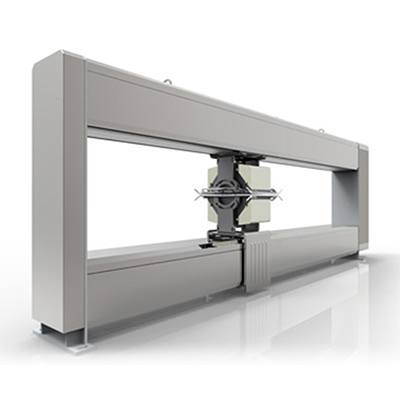

In the field of composite material manufacturing, prepregs are core raw materials for high-end industries such as aerospace, new energy vehicles, and wind turbine blades. A pre-impregnated material with a thickness of less than one millimeter may cause the final product strength to drop by more than 30% due to tiny wrinkles, bubbles or uneven resin. The industry's attention has once again turned to the innovation of surface defect detection technology - how to accurately capture the "hidden killers" in the vast amount of production data has become a key issue determining the competitiveness of the industry.
Prepreg material defects: From Hidden risks to Visible threats
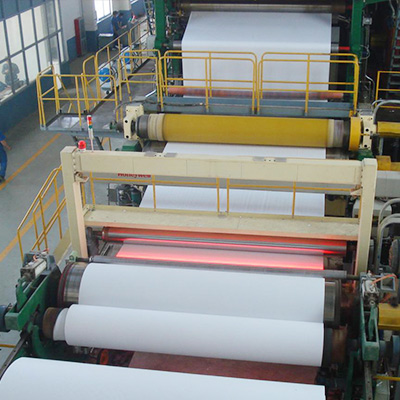
Pre-impregnated materials are made by pre-impregnating reinforcing fibers (such as carbon fibers and glass fibers) with resin matrices. Their quality directly affects the mechanical properties of the composite materials after lamination. Surface defects are mainly classified into three categories:
1. ** Physical defects ** : These include wrinkles, scratches, and fiber misalignment, which are mostly caused by uncontrolled winding tension or equipment wear
2. ** Chemical defects ** : Manifested as uneven resin distribution and abnormal local curing, they are closely related to fluctuations in temperature and humidity as well as changes in resin viscosity
3. ** Structural defects ** : Such as bubbles and foreign matter inclusions, usually result from insufficient cleanliness in the production environment
Traditional manual inspection relies on experienced engineers holding magnifying glasses to check each roll one by one, with a missed detection rate as high as 15% to 20%. A wind turbine blade manufacturer once found that an unidentified 0.5mm bubble expanded into a 3cm cavity during vacuum injection, directly resulting in the fatigue resistance performance of the entire batch of blades not meeting the standards.
The breakthrough evolution of intelligent detection technology
2.1 The Precision Revolution of Machine Vision Systems
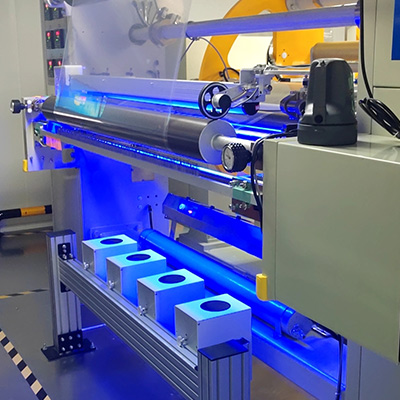
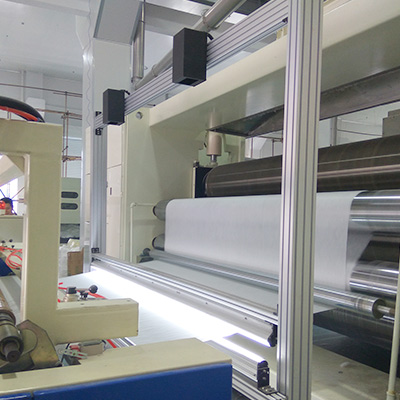
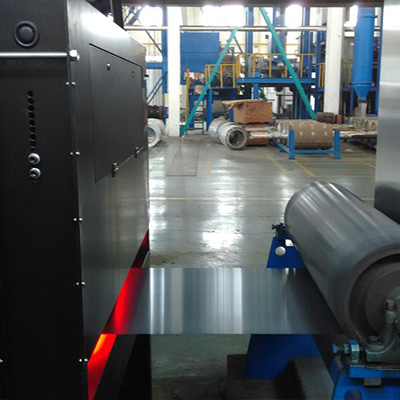
The dynamic scanning system based on linear array cameras is rewriting the detection rules. The latest generation of equipment adopts a 20-megapixel high-speed CMOS sensor and, in combination with an adaptive light source system, can capture defects at the 0.02mm level in real time. The Surface Vision 4.0 system developed by ISRA VISION of Germany, through multispectral imaging technology, can not only identify surface abnormalities, but also analyze the differences in resin permeability, with a detection speed of up to 120m/min.
2.2 Paradigm Shift in Deep Learning Algorithms
Convolutional neural networks (CNNS) have demonstrated astonishing potential in defect classification. After training with 100,000 labeled samples, the ResNet-50 architecture can achieve an accuracy rate of 99.3% in recognizing wrinkles and bubbles. What is more worthy of attention is the application of Generative adversarial networks (Gans) - by creating virtual defect samples, the generalization ability of the algorithm in scenarios with limited data is improved by more than 40%.
Iii. Technical Breakthroughs in Practical Implementation
In the aerospace field, after a certain model of carbon fiber prepreg production line introduced an online detection system, it achieved three major breakthroughs:
- ** Real-time closed-loop control ** : The detection data directly drives the winding tension adjustment mechanism, reducing the defect incidence rate by 62%
- ** Digital Twin Mapping ** : Each roll of material generates a unique quality ID, associated with over 200 process parameters, enabling full life cycle traceability
- ** Adaptive Learning Mechanism ** : The system automatically updates the defect feature library every quarter to address the detection challenges of new resin formulas


 Top
Top
 Email
Email
 WhatsApp

 Submit Form
 Down
Down