
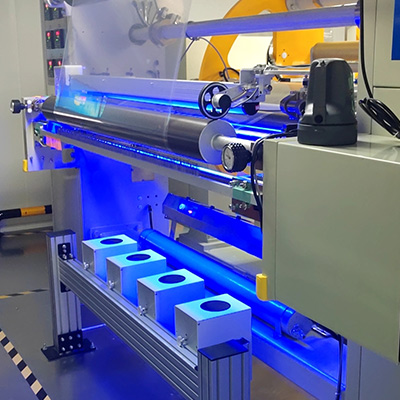
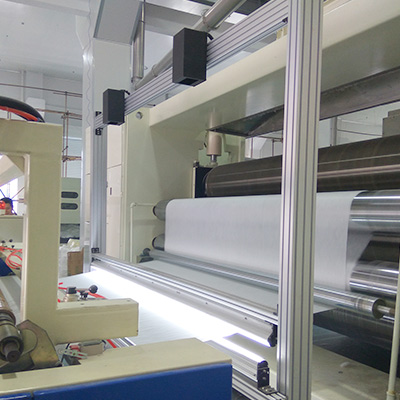
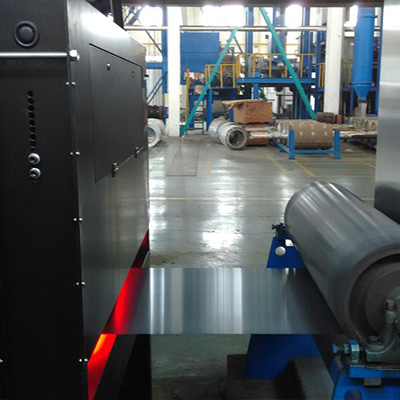
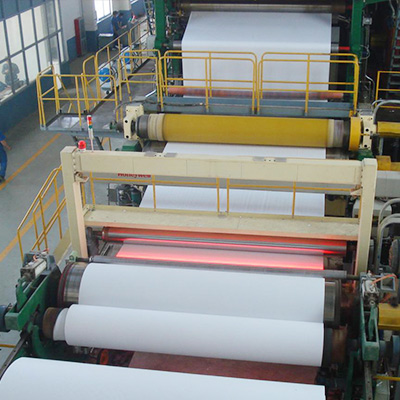
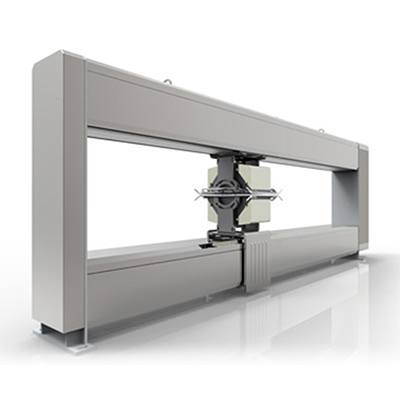

In core industrial fields such as energy, communication and construction, cable conduits and rods, as the "bloodline of industry", their surface quality directly affects system safety. A 0.2mm deep scratch may cause partial discharge in high-voltage cables, and tiny pits on the steel pipe wall may evolve into oil and gas leakage points. Traditional manual inspection is no longer capable of meeting the production speed of 30 meters per minute and the demand for micron-level defect identification. Intelligent inspection systems based on machine vision are becoming the core equipment for quality control.
Technical Challenge: The "All-View Offensive and Defensive Battle" of Cylindrical Curved Surfaces
The cylindrical shape of cable tubes and rods brings unique detection challenges:
360° full coverage: If a single camera has blind spots in the field of view, a circular array camera (6-8 groups of 50-megapixel cameras) or a rotating scanning mechanism should be used to ensure seamless splicing
Reflection suppression: The mirror reflection on the metal surface interferes with imaging. By combining a polarizing filter with a low-angle annular light source, the reflectivity is reduced by 80%
Dynamic tracking: For hot-state cables in extrusion molding, infrared thermal imagers and visible light fusion detection are used to simultaneously monitor temperature anomalies and surface defects
System Construction: From optical calibration to AI decision-making Chain
Hardware architecture
Optical layer: Line laser 3D scanning module (Z-axis resolution 1μm) + coaxial optical surface imaging system
Motion layer: Servo motor-driven precision rotary table (adjustable speed from 0 to 120rpm) + laser distance measurement and automatic focusing
Computing layer: Embedded edge computing terminals equipped with NVIDIA Jetson AGX
Software core
Preprocessing: The cylindrical surface expansion algorithm based on Hough transform converts the surface image into a planar expansion image
Defect recognition: The improved YOLOv5 model, trained for 15 types of defects such as scratches, depressions, and bubbles, supports the detection of tiny defects of 0.1mm²
Decision output: Linked with PLC to trigger inkjet marking or robotic arm sorting, with a response delay of less than 15ms
With the development of industrial Internet of Things and material big data, detection systems are shifting from "post-event discrimination" to "pre-event early warning" :
In the inspection of cooling pipes in nuclear power plants, the system predicts high-risk sections by analyzing corrosion data from previous years, with an accuracy rate of 89%
The power supply network of smart cities dynamically assesses the remaining service life of lines through the cable surface aging feature library
By 2026, the global market size of intelligent pipeline inspection is expected to reach 5.7 billion US dollars, among which the proportion of AI vision solutions will exceed 60%
From millimeter-level macroscopic defects to nanometer-level microscopic damages, intelligent visual inspection systems are reshaping the quality moat of cable tubes and rods. Driven by Industry 4.0 and the dual-carbon strategy, this cross-border technology that integrates optical engineering, fluid mechanics and materials science will continue to inject "zero-defect" manufacturing genes into key fields such as energy transmission, information interconnection and urban infrastructure.


 Top
Top
 Email
Email
 WhatsApp

 Submit Form
 Down
Down